Jack
Anxious PeopleJack is a police officer whose instinct to rescue people began with two encounters on the same bridge: first, his failure to stop the Man on the bridge from jumping, and then his rescue of Nadia. The first experience leaves him with recurring nightmares and a compulsion to make things right; the second quietly sets his career in motion. Ten years later, as he investigates an apartment hostage crisis with his father, Jim, those old impulses collide with the limits of what he can understand or control.
Identity and Background
Jack is Jim’s son and a younger police officer. He completes Police College and becomes a hard-working member of the local station, earning praise from others there but not from his father. His commitment to police work is also entangled with a more private need: since witnessing a man jump from a bridge, Jack has struggled to accept that some moments cannot be reversed. His mother fears that he has never emotionally left that bridge, a judgment he does not try to disprove.
His mother, a priest, is remembered as outspoken, irreverent, and deeply committed to helping people. She carried her work into difficult settings and believed that acting well still mattered even when the future looked bleak. Jack loves her, although he does not share her religious faith. When she is dying, he kneels alone in a hospital corridor and prays for her to survive; after she dies, he holds her hand and promises to care for Jim. His grief gives the promise lasting weight: the family’s care for one another is complicated by their older daughter’s heroin addiction, and by the repeated hope that she will return home.
The Bridge and Its Aftermath
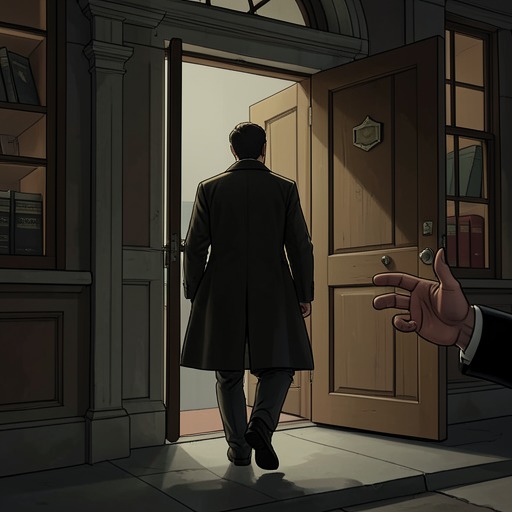
As a teenager, Jack returns to the bridge night after night for a week after seeing the Man on the bridge jump. His parents have forbidden him to go back, but he sneaks out, apparently unable to stop revisiting the place. He hopes, without knowing how, to turn back time and make the earlier event come out differently. When he finds Nadia on the railing instead, he does not call out. He runs to her and pulls her down; she is knocked unconscious. At the hospital, Nadia cannot explain what happened and tells the nurses that she had climbed up to photograph the sunset and fallen.
Jack and Nadia never meet again then, and neither knows the other’s identity. For Jack, however, the rescue becomes decisive: it makes his plan to become a police officer unshakable, because he understands that he might be able to make a difference. The same event that gives him a vocation also leaves him haunted by what he could not do for the man who came before her.
Ten years later, the nightmares remain. Jack relives the wind, the sound of shoes scraping against the railing, and the scream he barely registered at the time. He works long shifts and late nights, then runs through the dark and cold without trying to reach any destination. Exhaustion, alcohol, and sleeping pills become ways of coping with nights that feel unbearable, but none of them ends the recurring dreams. His mother’s concern that he is still trying to save the man is therefore more than a passing observation: the old failure shapes how he responds to danger in the present.
Police Work and the Apartment Crisis
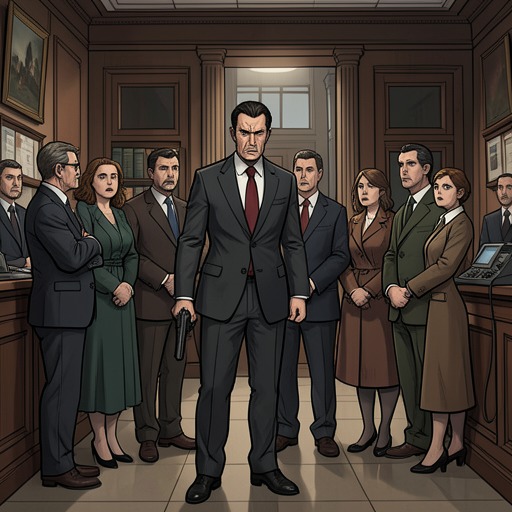
During the hostage crisis, Jack is the first officer through the apartment door after the hostages are released and a pistol shot rings out. He rushes through the living room and opens the balcony door, convinced that the Bank robber must have jumped. From the balcony he can see the bridge, but there is no one below; the robber has disappeared. The scene repeats the pattern that defines his fear, even though this time the person he expects to find missing is the perpetrator rather than the Man on the bridge.
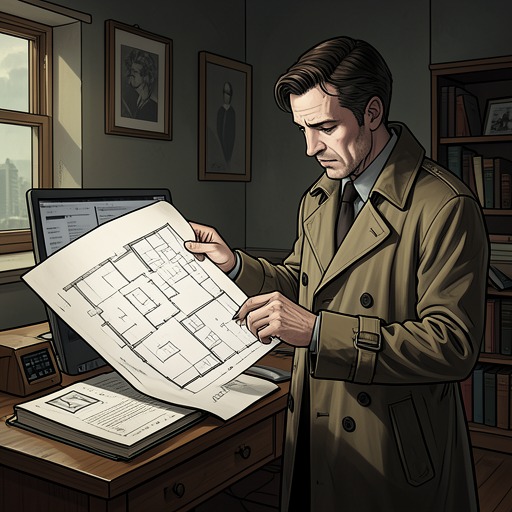
As the investigation stalls, Jack studies the witness-interview notes again, spreading them around the sofa. Stress shows in his habit of biting along his tongue. He finally sees that the police have assumed one person was present throughout the crisis when that person was not: the Bank robber was never concealed in the apartment, but walked out into the street in front of them. This is a real deduction, but it does not lead him to the right identification. At the police station he angrily insists that the Real estate agent is the Bank robber and that there was never a genuine agent in the apartment. His certainty reflects how difficult it is for him to tolerate having missed something obvious; the Real estate agent cannot readily prove her innocence because she does not know where the actual robber is.
Earlier, Jack had argued that the perpetrator was frightened rather than dangerous. He reasons that someone who had ordered pizzas for the hostages by throwing limes at the police was not acting with calm, deliberate control. He asks to speak with the person inside, initially reaching for the idea that he can save everyone before recasting his aim as fixing the situation. The shift matters: his compassion is real, but his wish to rescue can make a complicated crisis feel like a personal test of whether he can put everything right.
Family, Responsibility, and the Limits of Rescue
Jack’s relationship with Jim combines affection, professional friction, and grief. They have worked together despite Jack’s mother having warned that the arrangement would cause trouble. During the hostage investigation, Jack struggles to accept that his father may be right when his own theory about the Real estate agent begins to fail. In the corridor, he tries to insist that she must have done it, but his conviction weakens as he speaks and Jim silently shakes his head.
When Jim later tells Jack the truth about what he has done, Jack wants to be angry but instead begins planning what to do next. He tells Jim to stay behind, then goes out to face the reporters alone. Jack publicly takes responsibility for the police response and states that they have lost the perpetrator and do not know where the person is. The next morning, investigators from Stockholm review the statements and evidence but decide they cannot commit further resources: nobody was hurt and nothing was stolen. Jack’s willingness to shoulder public blame contrasts with the uncertainty and institutional withdrawal surrounding the case.
The promise to look after Jim after their mother’s death sits alongside Jack’s fear for his sister. She is seven years older and was an idol to him when he was young. Jack and Jim continue sending her money when she calls with promises to come home, even as Jack fears that an unfamiliar phone number may bring news of her death. He cannot save her by willing her recovery, just as he could not undo the Man on the bridge’s jump. The family’s repeated hope for the sister and Jack’s rescuing impulse share the same painful limit: care does not guarantee control over another person’s choices.
Reunion with Nadia
In spring, ten years after the bridge incident, Jack receives an unstamped letter at his home. It directs him to an office and includes a photograph of the bridge and another sealed envelope bearing a name. He follows the address and finds Nadia. She recognizes neither the reason for his visit nor, at first, who he is, but he recognizes her from the railing even after all those years.
Jack hands her the envelope Zara has arranged for her. It contains a short note reminding Nadia that she saved herself and that Jack happened to be there. When Nadia briefly loses her balance, Jack catches her arm. She asks whether he was the boy on the bridge, and he nods. The reunion does not erase the uncertainty Nadia has carried about what she might have done, or the years Jack spent reliving the earlier rescue. Instead, it brings their separate memories into the same room: Jack is no longer only the boy who acted without knowing what to say, and Nadia can finally identify the person who reached her. Their meeting gives the story’s two bridge encounters a quiet connection, while leaving their future relationship open.